
No Doc Mortgage: The Ultimate 2026 Guide to a Powerful, Flexible Home Loan (7 Key Facts You Must Know)
No Doc Mortgage: The Complete Guide for Self-Employed and Non-Traditional Borrowers
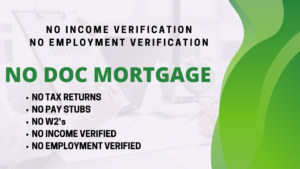
A No Doc Mortgage is a specialized home loan designed for borrowers who cannot easily prove income using traditional documents like W-2s, pay stubs, or tax returns. In today’s flexible lending market, this loan option has become a powerful solution for self-employed individuals, investors, and freelancers who earn well but document differently.
Unlike conventional loans, a No Doc Mortgage focuses on assets, credit strength, and property value rather than standard income paperwork. This makes it especially appealing in 2026, as more people work independently or earn income from multiple sources.
What Is a No Doc Mortgage and Why It Exists
Definition of a No Doc Mortgage
A No Doc loan allows borrowers to qualify without submitting traditional income verification documents. Instead of tax returns or employment letters, lenders evaluate alternative indicators such as bank deposits, liquid assets, or property cash flow.
History and Evolution of No Doc Loans
Originally popular before the 2008 housing crisis, No Doc Mortgage products disappeared for a time. However, modern versions are far more regulated and now fall under Non-Qualified Mortgage (Non-QM) guidelines, offering flexibility while maintaining responsible lending standards.
How a No Doc Mortgage Works
Income Verification Explained
While the name suggests “no documentation,” lenders still verify financial stability using alternative methods such as credit score and assets.
Down Payment Requirements
A No Doc loan typically requires a larger down payment, often between 20% and 35%, to offset lender risk.
Interest Rates and Loan Terms
Interest rates are generally higher than conventional loans. Terms may include fixed-rate or adjustable-rate options, depending on lender guidelines.
Who Should Consider a No Doc Mortgage
Self-Employed Professionals
Business owners often reduce taxable income through deductions, making traditional loans difficult. A No Doc loan solves this problem.
Real Estate Investors
Investors with multiple properties benefit from faster approvals and flexible qualification criteria.
Freelancers and Gig Workers
Those earning through contracts, commissions, or online platforms can qualify without standard employment verification.
Types of No Doc Mortgage Options
No Income Verification Loans
Approval is based on credit score and asset requirements.
Investor Loans
DSCR loans focus on property income rather than borrower income.
Pros and Cons of a No Doc Mortgage
Key Advantages
-
Faster approval process
-
Ideal for self-employed borrowers
-
Flexible income verification
-
Fewer paperwork requirements
Potential Risks and Drawbacks
-
Higher interest rates
-
Larger down payments
-
Limited lender availability
Qualification Requirements in 2026
Credit Score Expectations
A minimum credit score of 640 is required, though higher scores receive better terms.
Loan-to-Value (LTV) Ratios
Lower LTV ratios improve approval chances and interest rates.
No Doc Mortgage vs Traditional Mortgage
Documentation Differences
Traditional loans rely on tax returns and W-2s, while a No Doc loan relies on assets and cash flow.
Cost and Approval Speed
No Doc loans are faster but more expensive upfront.
Interest Rates and Fees Explained
Why Rates Are Higher
Lenders price in additional risk due to reduced documentation.
Typical Fee Structures
Expect origination fees, underwriting fees, and sometimes prepayment penalties.
Common Myths About No Doc Mortgage
-
Myth: No Doc loans are illegal
-
Myth: Anyone can qualify
-
Myth: They caused the housing crash
Modern No Doc loan products are regulated and designed for responsible borrowers.
Step-by-Step Process to Apply
-
Assess credit and assets
-
Choose a Non-QM lender
-
Property appraisal
-
Loan approval and closing
For more lending insights, visit Consumer Financial Protection Bureau (CFPB): https://www.consumerfinance.gov
FAQs
1. Is a No Doc Mortgage legal in 2026?
Yes, it is legal under Non-QM lending guidelines.
2. Can first-time buyers apply?
Yes, but requirements are stricter.
3. Are interest rates fixed or adjustable?
Both options are available.
4. How much down payment is required?
Typically 20%–35%.
5. Does a No Doc Mortgage hurt my credit?
No, as long as payments are made on time.
6. Can I refinance a No Doc Mortgage later?
Yes, refinancing into a traditional loan is possible.
Final Thoughts: Is a No Doc Mortgage Worth It?
A No Doc Mortgage is an excellent solution for borrowers with strong finances but non-traditional income. While costs are higher, the flexibility, speed, and accessibility make it a valuable option for the right borrower. If traditional mortgages don’t reflect your true earning power, this loan may be the key to achieving homeownership or expanding your investment portfolio.
Apply Now!
For a quicker response, call 888-958-5382

Mortgage-World
Written by: Chris Luis, owner/loan officer for Mortgage-World.com
-
Chris Luis covers mortgages and the housing market. He has over 20 years experience in the mortgage industry.
