
FHA Bad Credit: 9 Powerful Secrets to Secure Home Loans with Confidence
Introduction to FHA Bad Credit Loans
If you’ve ever worried that your low credit score might block your dream of homeownership, you’re not alone. The good news? FHA Bad Credit loan programs are designed specifically to help borrowers with less-than-perfect credit buy homes. These loans offer flexibility, lower barriers, and realistic opportunities for people rebuilding their financial lives.
In today’s housing market, many buyers assume they need perfect credit to qualify. That’s simply not true. With an FHA-backed mortgage, you may still qualify—even if your credit history has a few bumps and bruises.
What Does FHA Stand For?
FHA stands for the Federal Housing Administration. It is part of the U.S. Department of Housing and Urban Development (HUD). The FHA doesn’t lend money directly. Instead, it insures loans made by approved lenders. You can learn more about FHA guidelines directly from the official HUD website here: https://www.hud.gov
Why FHA Loans Help Borrowers with Bad Credit
FHA loans were created to increase homeownership access. Since lenders face less risk due to government insurance, they are more willing to approve borrowers with:
-
Lower credit scores
-
Higher debt-to-income ratios
-
Limited savings
-
Past bankruptcies or foreclosures
That’s why FHA Bad Credit options remain one of the most popular mortgage programs in the United States.
How FHA Bad Credit Loans Work
Understanding how these loans function helps you prepare properly and avoid surprises.
Government Backing and Lender Protection
Because the FHA insures the loan, lenders are protected if a borrower defaults. This reduces lender risk and opens doors for applicants who might otherwise be denied under stricter conventional standards.
Credit Score Flexibility Explained
Unlike many traditional loans requiring 620+ credit scores, FHA guidelines allow approvals with much lower scores. Lenders may even consider non-traditional credit history, such as rent payments and utility bills.
Minimum Credit Score Requirements
Let’s break this down clearly.
Credit Score of 580 and Above
If your credit score is 580 or higher, you may qualify for:
-
3.5% minimum down payment
-
Competitive interest rates
-
Standard FHA terms
This is the most common approval range.
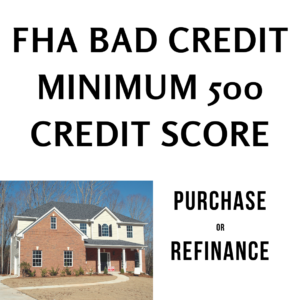
Credit Score Between 500–579
Borrowers with scores between 500 and 579 may still qualify. However:
-
A 10% down payment is typically required
-
Lender approval is stricter
-
Additional documentation may be needed
Scores below 500 generally do not qualify.
Down Payment Requirements
One major reason FHA Bad Credit loans are so attractive is the low down payment requirement.
3.5% Down Payment Rule
With a 580+ credit score, buyers need just 3.5% down. On a $250,000 home, that’s only $8,750.
10% Down Payment Option
If your credit score is lower, a 10% down payment may apply. While higher, it still allows access to homeownership when conventional loans are out of reach.
Debt-to-Income (DTI) Ratio Guidelines
Lenders assess how much of your monthly income goes toward debt.
Standard DTI Limits
Typical FHA guidelines allow:
-
31% for housing expenses
-
43% total debt ratio
Some approvals exceed 50% with strong compensating factors.
Compensating Factors
These can improve approval odds:
-
Large savings reserves
-
Stable employment history
-
Higher income growth
-
Minimal discretionary spending
FHA Loan Limits by State
Loan limits vary depending on where you live.
How Loan Limits Are Determined
FHA loan limits are based on median home prices in each county. High-cost housing areas have higher limits.
High-Cost vs Low-Cost Areas
In 2024, limits range from around $498,000 in lower-cost areas to over $1 million in high-cost regions. Always check your county’s current limit.
Benefits of FHA Bad Credit Programs
There’s a reason this program remains popular.
Lower Credit Barriers
The biggest advantage is accessibility. FHA loans consider borrowers others might decline.
Competitive Interest Rates
Despite lower credit requirements, FHA loans often offer reasonable interest rates compared to subprime lending options.
Potential Drawbacks to Consider
No loan is perfect. Be aware of these factors.
Mortgage Insurance Premiums (MIP)
FHA loans require:
-
Upfront mortgage insurance premium (UFMIP)
-
Annual mortgage insurance payments
Unlike conventional PMI, MIP often lasts the life of the loan.
Property Standards
Homes must meet minimum property standards. Fixer-uppers may require additional approval or renovation loans.
Step-by-Step Guide to Applying
Here’s how to approach your FHA Bad Credit application confidently.
Pre-Approval Process
Start with lender pre-approval. This helps you:
-
Understand your budget
-
Strengthen your offer
-
Identify credit improvements
Documentation Checklist
Be prepared with:
-
W-2s and tax returns
-
Pay stubs
-
Bank statements
-
Credit explanations for past issues
Tips to Improve Approval Odds
Even small improvements make a difference.
Boosting Your Credit Score
-
Pay down credit cards
-
Avoid new accounts
-
Dispute report errors
-
Make on-time payments
Reducing Debt Before Applying
Lowering credit card balances can dramatically improve your debt-to-income ratio.
FHA vs Conventional Loans
Which is better? It depends.
Key Differences
Feature
|
FHA Loan |
Conventional Loan |
|---|---|---|
Minimum Credit |
500–580 |
620+ |
Down Payment |
3.5% |
3–20% |
Mortgage Insurance |
Required |
May be removable |
Which Option Is Better?
If your credit score is below 620, FHA is often the stronger option. If your score improves later, refinancing into a conventional loan can eliminate mortgage insurance.
Common Mistakes to Avoid
Ignoring Credit Reports
Always review your credit before applying. Small errors can cost you approval.
Making Large Purchases Before Closing
Avoid new loans, cars, or large credit charges before final approval.
FAQs About FHA Bad Credit
1. Can I get approved with a 550 credit score?
Yes, but you’ll likely need a 10% down payment.
2. Does FHA require perfect credit?
No. The program is designed for borrowers with less-than-perfect credit.
3. How long after bankruptcy can I apply?
Typically two years after Chapter 7 discharge, with re-established credit.
4. Can I use gift funds for the down payment?
Yes, FHA allows gift funds from approved sources.
5. Are FHA interest rates higher?
Not necessarily. They are often competitive due to government backing.
6. Can I refinance later?
Yes, FHA offers streamline refinancing options.
Conclusion: Is FHA Bad Credit Right for You?
Homeownership isn’t reserved for people with flawless credit. The FHA Bad Credit program proves that second chances exist in the mortgage world. With flexible requirements, manageable down payments, and government-backed security, it offers a practical pathway to buying a home—even after financial setbacks.
If your credit needs improvement but you’re financially stable otherwise, FHA may be your stepping stone. Take time to review your credit, gather documentation, and speak with an approved lender. With preparation and smart planning, your dream home could be closer than you think.
Apply Now!

For a quicker response, call 888-958-5382
Mortgage-World
Written by: Chris Luis, owner/loan officer for Mortgage-World.com
-
Chris Luis covers mortgages and the housing market. He has over 20 years experience in the mortgage industry.
