
No Doc Mortgages: 9 Powerful Facts Smart Borrowers Must Know Before Applying
What Are No Doc Mortgages?
Definition and Core Concept
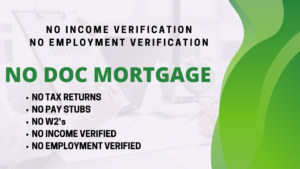
No Doc Mortgages (short for No Documentation Mortgages) are home loans that require no income verification. Unlike conventional mortgages, lenders do not require extensive documentation like tax returns, pay stubs, or employment verification.
Instead, lenders assess the borrower using alternative indicators such as:
-
Asset holdings
-
Credit history
The goal is simple: provide financing to individuals whose income is real but difficult to document traditionally.
Why These Loans Were Created
Traditional mortgages work best for salaried employees with predictable income. However, millions of people earn money in ways that don’t fit that model.
Examples include:
-
Small business owners
-
Consultants
-
Contractors
-
Digital entrepreneurs
-
Real estate investors
These borrowers may show lower income on tax returns due to deductions, which can make them appear less qualified for traditional loans. No Doc Mortgages were developed to solve this problem.
The Evolution of No Doc Mortgages
Pre-2008 Lending Environment
Before the 2008 financial crisis, lenders widely offered No Doc Mortgages with very little oversight. Some programs required almost no verification at all.
Common loan types included:
-
Stated income loans
-
NINJA loans (No Income, No Job, No Assets)
These loans became controversial because some borrowers overstated income, contributing to risky lending practices.
Post-Financial Crisis Regulations
After the housing market crash, strict lending rules were introduced. Governments and financial institutions implemented tighter regulations requiring lenders to verify a borrower’s ability to repay.
As a result, traditional No Doc Mortgages largely disappeared.
However, no doc mortgages have emerged again. Due to the higher risk, the terms have become stricter.
Who Should Consider No Doc Mortgages
Self-Employed Professionals
Entrepreneurs often write off expenses to reduce taxable income. Unfortunately, this can make it harder to qualify for conventional loans.
No Doc Mortgages allow lenders to analyze credit score and assets instead of relying solely on tax returns.
Retirees and High Net-Worth Individuals
Retirees living off savings, pensions, or dividends often have substantial assets but no active employment. This mortgage option allows them to leverage wealth without needing a job letter.
Freelancers and Gig Workers
Modern careers often involve multiple income sources:
-
Freelance projects
-
Online businesses
-
Contract work
-
Gig platforms
These income streams may fluctuate, but lenders offering No Doc Mortgages can evaluate financial stability through bank deposits.
How No Doc Mortgages Work
Application Process
The application process typically involves these steps:
-
Choose a specialized lender
-
Submit basic financial information
-
Undergo credit evaluation
-
Complete property appraisal
Approval timelines are often faster than traditional loans because fewer documents are required.
Required Documentation
If funds are needed for down payment and reserves, lenders may review:
-
Personal bank statements
-
Business bank statements
-
401k statements
-
IRAs
These methods provide lenders with a broader view of the borrower’s financial stability.
Credit Score and Down Payment Requirements for Approval
Credit Score and Down Payment Expectations
Most lenders require higher credit scores for no-documentation loans.
- 640 credit score – 35% down payment with 6 months reserves
- 660 credit score – 30% down payment with 6 months reserves
- 680 credit score – 25% down payment with 6 months reserves
- 720 credit score – 20% down payment with 9 months reserves
Higher credit scores can also lead to better interest rates.
Advantages of No Doc Mortgages
Several benefits make these loans appealing.
1. Less Paperwork
Borrowers avoid gathering years of tax returns and financial statements.
2. Faster Loan Approval
Reduced documentation speeds up underwriting.
3. Ideal for Non-Traditional Income
Self-employed professionals benefit significantly.
4. Flexible Qualification Methods
Lenders can evaluate financial strength using assets.
Potential Risks and Disadvantages
Despite their benefits, No Doc Mortgages also come with drawbacks.
Higher Interest Rates
Lenders charge slightly higher rates to offset risk.
Larger Down Payments
Borrowers must typically contribute more upfront.
Limited Availability
Not all lenders offer these programs.
Stricter Credit Requirements
Higher credit scores are usually necessary.
Comparing No Doc Mortgages vs Traditional Loans
Feature
|
No Doc Mortgages |
Traditional Mortgages |
|---|---|---|
Income Verification |
Minimal |
Extensive |
Approval Speed |
Faster |
Slower |
Interest Rates |
Higher |
Lower |
Down Payment |
Higher |
Lower |
Ideal For |
Self-employed borrowers |
Salaried employees |
Steps to Qualify for No Doc Mortgages
Borrowers can improve approval chances by following these steps:
-
Maintain a credit score above 640
-
Build significant cash reserves
Working with a mortgage broker experienced in No Doc Mortgages can also improve approval odds.
Interest Rates and Costs
Interest rates for reduced documentation loans vary depending on:
-
Credit score
-
Down payment
-
Loan amount
-
Property type
On average, rates may be 1% to 2% higher than traditional mortgage loans.
Additional costs may include:
-
Higher lender fees
-
Larger reserve requirements
Tips for Getting Approved Faster
Here are expert strategies to speed up approval:
-
Maintain clean and organized bank statements
-
Avoid large unexplained deposits
-
Keep credit utilization low
-
Show strong asset reserves
-
Work with specialized lenders
Preparation significantly improves the success rate for No Doc Mortgages.
Types of Alternative Income Programs
One of the most popular modern alternatives to No Doc Mortgages is the bank statement loan.
Instead of tax returns, lenders review 12–24 months of bank statements to determine income.
Benefits include:
-
Ideal for self-employed borrowers
-
Faster approval process
-
More accurate reflection of real income
Asset-based loans allow borrowers to qualify using their liquid assets instead of income.
Eligible assets may include:
-
Savings accounts
-
Investment portfolios
-
Retirement accounts
Lenders calculate how long these assets could support mortgage payments.
These loans focus on property income rather than personal income.
Approval depends largely on:
-
Rental income potential
-
Property value
-
Debt coverage ratio (DSCR)
This option is popular with real estate investors purchasing rental properties.
Frequently Asked Questions
1. Are No Doc Mortgages still available today?
Yes, although traditional versions disappeared after 2008, they have made a comeback over the last few years.
2. Who typically qualifies for No Doc Mortgages?
Self-employed individuals, freelancers, entrepreneurs, and high asset borrowers often benefit most from these loan programs.
3. Do No Doc Mortgages require a down payment?
Yes. Most lenders require at least 20–35% down depending on the property type.
4. Are interest rates higher on these loans?
Typically yes. Rates may be slightly higher than conventional loans to compensate for increased lender risk.
5. Can first-time homebuyers use No Doc Mortgages?
Yes—especially if they have strong credit and sufficient assets but lack traditional income documentation.
6. Where can I learn more about mortgage options?
You can explore lending guidelines and consumer information at the Consumer Financial Protection Bureau website:
https://www.consumerfinance.gov
Conclusion
In today’s dynamic economy, many successful professionals earn income outside traditional employment structures. For these individuals, No Doc Mortgages provide a valuable alternative path to homeownership and real estate investment.
While these loans come with higher requirements and costs, they offer flexibility that conventional mortgages simply cannot match. By maintaining strong credit, building assets, and choosing the right lender, borrowers can successfully secure financing without traditional income documentation.
For entrepreneurs, freelancers, and high asset borrowers, No Doc Mortgages may be the key that unlocks new property opportunities.
Apply Now!

For a quicker response, call 888-958-5382
Mortgage-World
Written by: Chris Luis, owner/loan officer for Mortgage-World.com
-
Chris Luis covers mortgages and the housing market. He has over 20 years experience in the mortgage industry.
